
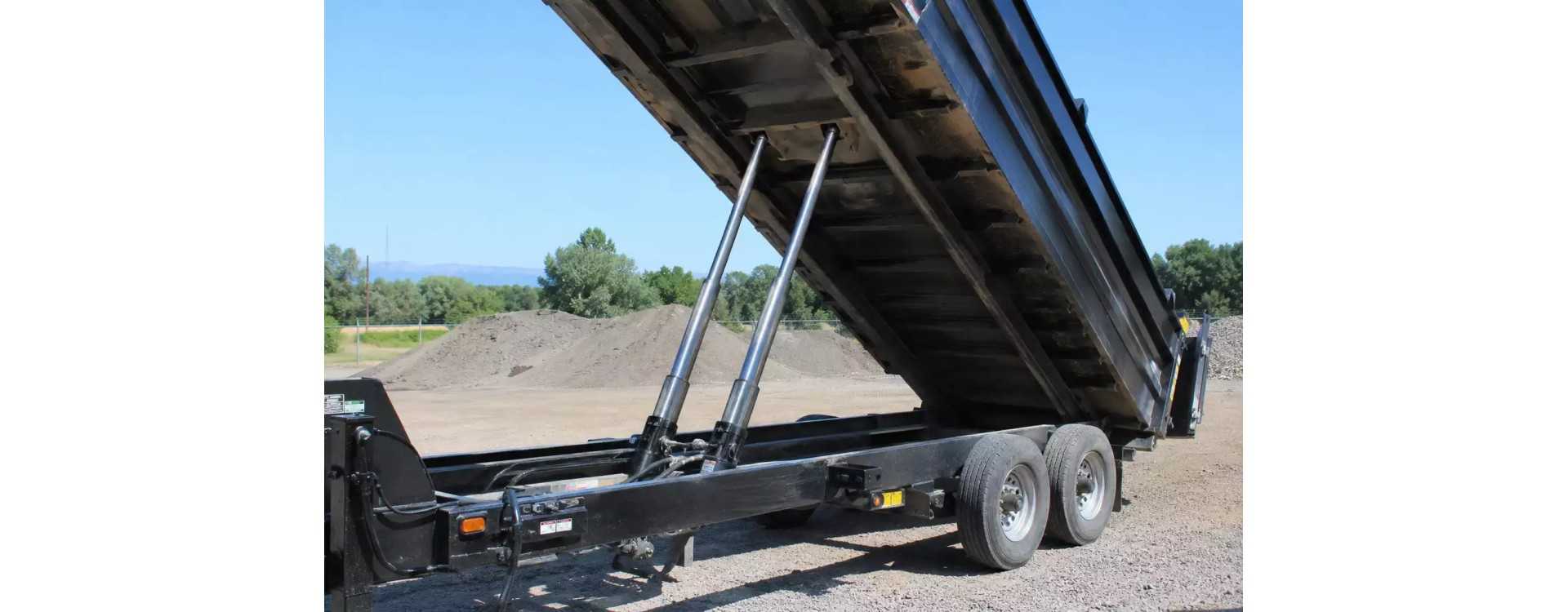
Two Cylinders, One Load, Zero Synchronization: The Classic Hydraulic Trap
Load imbalance in hydraulics: the synchronization nightmare
You want to lift two cylinders together on a platform or a dump body? Well, brace yourself, because oil always goes where it is easiest. You could almost call it hydraulic laziness.
If you simply use a T-fitting to feed two actuators, the system will naturally favor the side with the lighter load or the shorter hose.
Why two identical cylinders will never stay perfectly synchronized
The problem is that even with two components straight out of the same box, perfect identity does not exist. Between seal manufacturing tolerances, which affect internal leakage, and tiny differences in mechanical friction, a shift will always eventually appear.
The real issue is pressure drop. A hose that is 50 cm longer, or one extra elbow on the right-hand side compared with the left, is enough to create a pressure difference which, by domino effect, throws the whole system out of sync. And that is where the problems begin: a load that tilts to one side increases the pressure on that same side, changes the oil’s viscosity, and makes the imbalance even worse.
The trap of a misunderstood counterbalance valve
It is commonly believed that simply adding counterbalance valves is enough to solve the problem. That is partly true for safety, but it can become a trap for precision if the pilot ratio is not properly understood. If your valves are set too “tight”, you will generate vibrations, or hunting, because the valve will keep opening and closing rapidly to control the descent. On the other hand, if the setting is too loose, it will not hold anything properly.
On this type of setup, pressure-compensated valves completely change the behavior because they ignore return-line back-pressure variations, ensuring a smooth descent even when the load is off-center.
What can be done? 3 possible solutions
Flow divider
The real solution, at least in the field. For robust synchronization, with around 3 to 5% error, the gear flow divider remains the benchmark. Unlike a spool-type divider, it is less sensitive to oil viscosity and allows the cylinders to be rephased at the end of the stroke thanks to integrated relief valves. It is the go-to solution on agricultural machinery or basic presses.
Thermal management
The forgotten criterion. Oil at 60°C no longer behaves the same way as oil at 20°C. If your system works perfectly in the morning but starts moving sideways after two hours of cycling, do not look much further: internal leakage increases as the oil becomes more fluid. Installing a common drain line or a better-sized oil cooler is sometimes more effective than replacing the valves.
Electronic control
For those who need millimetric accuracy, a fully hydraulic solution is no longer enough. You then move to proportional directional valves controlled by an axis controller, which compares in real time the position feedback from sensors, such as LVDTs or encoders, on each cylinder. This is probably the only way to cancel out the effects of mechanical deformation in the structure.
Keep this in mind for your diagnostics
Final tip: if your machine jerks or moves out of alignment, do not look only at the pump. I have seen guys lose three days on that for nothing. Check the filtration. Sometimes, that is all it takes. Micro-contamination in a pilot orifice, or a flow divider spool that is slightly sticking, is enough to create an imbalance.
Take dynamic pressure readings at both ends of the cylinders and compare the deltas. Very often, the truth lies in a difference of just two or three bar. A tired hose, a drifting valve… and suddenly the whole system stops working properly.
So there you go. After that, if you still want to use a simple T-fitting, that is your choice. But do not say I did not warn you.
Related posts
 Solution hydraulique la plus adaptée aux besoins de nos clients Commande client prête au départ chez OCGF.